How To Create Windows Restore Point In a Simple Way
Updated July 2026: This guide has been refreshed for Windows 10 24H2. The restore point process works identically on Windows 10 and Windows 11, but the screenshots below now reflect the current Windows 10 interface. If you install third-party themes, icon packs, or system patching tools, creating a restore point first is strongly recommended.
What is Restore Point and what are its uses?
Restore Point is a function that takes your Windows from its current state to its previous state. This restore point will help you get rid of any bugs or viruses that you may have encountered with your newly installed application.
Restore Point is especially important before installing third-party Windows themes, icon packs, or system patching tools like UltraUXThemePatcher — if something breaks your system files, a restore point lets you roll back without reinstalling Windows.
Note: Restore Point is created automatically when you install some software on your Windows, and you need to manually create Restore Point when testing new and unfamiliar software.
How To Create Windows Restore Point
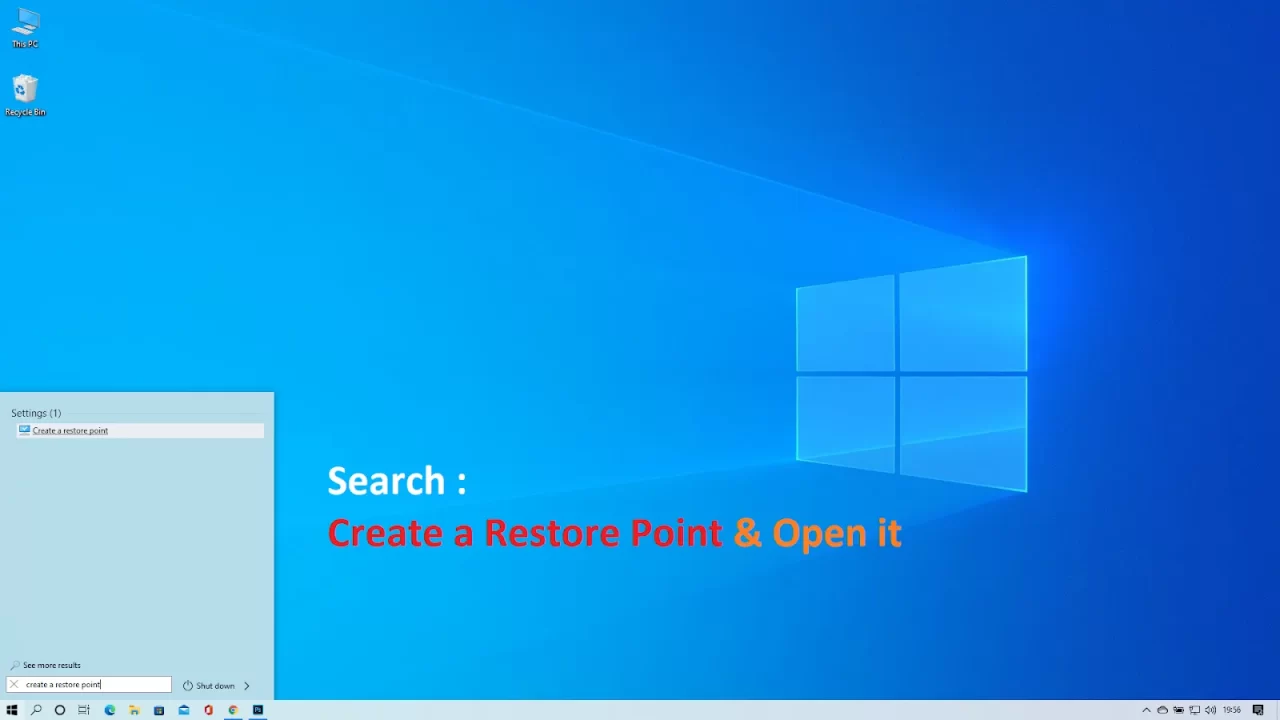
Step 1: Open your search bar and type Create a restore point, then open it.
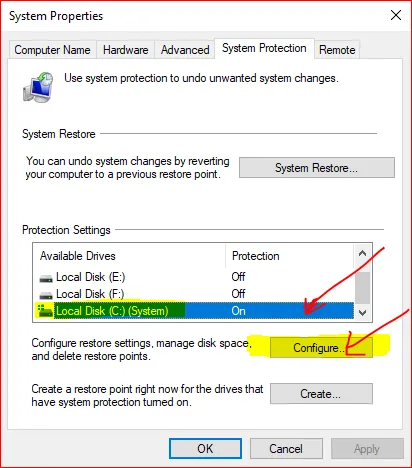
Step 2: In the System Properties window, select Local Disk (C:) and click Configure…
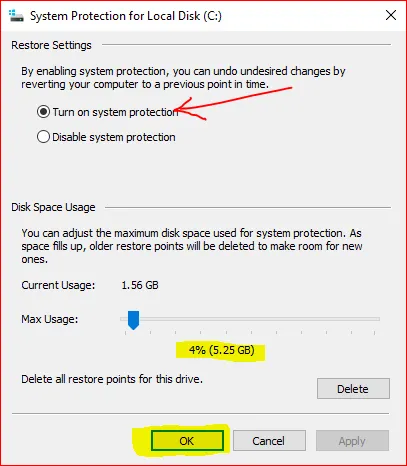
Step 3: Choose Turn on system protection, set the Max Usage slider (4–10% is usually enough), then click OK.
Step 4: Back in the System Protection tab, click Create…
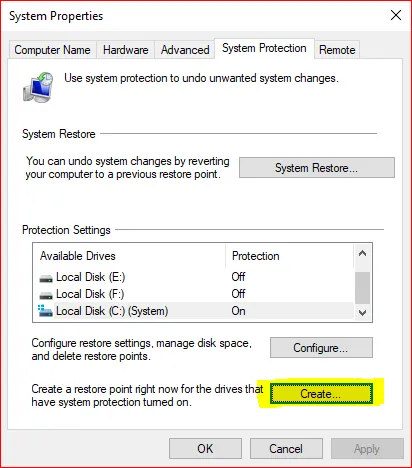
Step 5: Type a name for your restore point (for example, Before Theme Install) and then click Create.
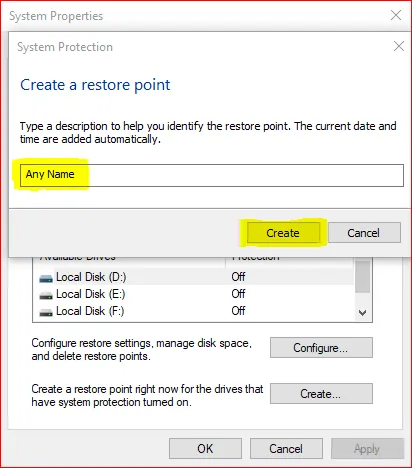
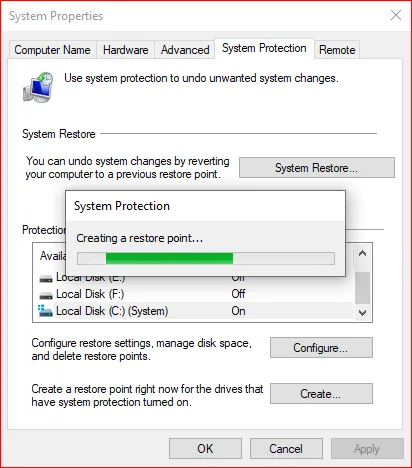
Step 6: The process will take a few seconds. You will see a progress bar.
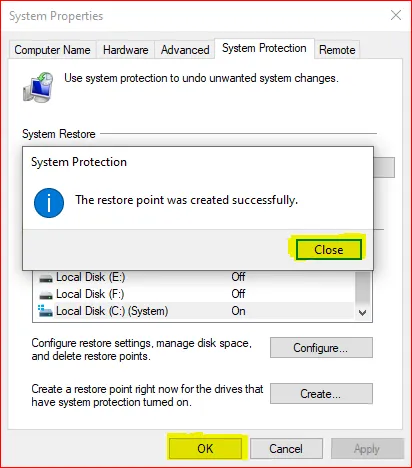
Step 7: Once you see the message “The restore point was created successfully,” click Close, then OK.
Shortcut Tip: On Windows 11, you can also open this directly by pressing Win + R, typing sysdm.cpl, and hitting Enter. This shortcut works on both Windows 10 and 11.
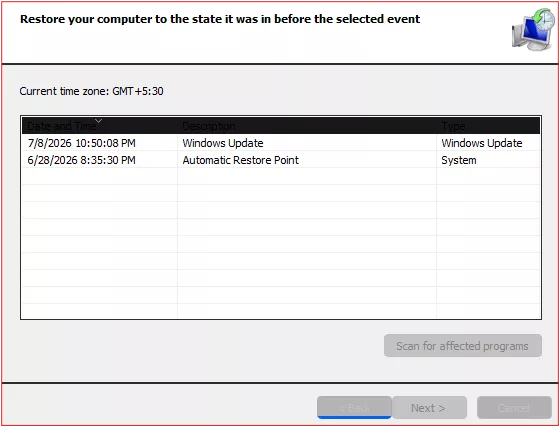
How to Use a Restore Point
If your system becomes unstable after installing a theme, icon pack, or system patch:
- Open Create a restore point again (same as Step 1).
- Click System Restore…
- Click Next, select your restore point from the list, and click Finish.
- Your PC will restart and revert to that saved state. Personal files are not affected, but apps installed after the restore point was created may need to be reinstalled.
Troubleshooting
- “System Protection” is greyed out? You need administrator rights. Right-click the Start button, select Run, type
sysdm.cpl, and confirm the UAC prompt. - Restore point creation fails? Check if your C: drive has at least 300 MB of free space. Reduce the “Max Usage” slider in Step 3 if needed.
- Windows 11 Home vs Pro? Restore points work on both editions. The steps are identical.
- Can I restore from Safe Mode? Yes. If Windows won’t boot normally, restart into Safe Mode and run System Restore from there.
After creating a restore point, you can freely try out the themes or icons available on our website; they are all free. and Check out our channel for a visual guide on customization.

ok good and all but what to do after that?
how do i actually use that restore point if something on my pc went wrong?
To use a restore point in Windows 11, type Create a restore point in the search bar, open the System Properties window, and click System Restore. From there, select Next, choose a restore point from the list (using Show more restore points if needed), and click Next and then Finish to start the process. Windows will then restart your PC to the selected point. from google idk if this fully works so take it with some salt but have a nice day\
Yah tamam beautiful hai
of course like your web-site however you need to test the spelling on quite a few of your posts. Many of them are rife with spelling problems and I in finding it very bothersome to inform the truth on the other hand I’ll surely come back again.